
Blueberry – A Beautifully Fractured Journey Through the Mind
There is a specific kind of magic that happens when you settle into your couch, controller in hand, and let a game entirely absorb you into its world. No distractions, no complicated keyboard bindings, just a seamless connection between your inputs and the emotional journey unfolding on the big screen. This is exactly how I experienced Blueberry, the latest story-driven puzzle platformer set to release on May 28, 2026.
- Game Details
- Blueberry – A Beautifully Fractured Journey Through the Mind
- Ascending the Tower of Life
- The Mechanics of the Mindscape
- Four Seasons of a Fractured Life
- Childhood: Innocence and Shadows
- Teenage Years: Rebellion and Math Tests
- Adulthood: The Weight of Existence
- Old Age: Re-evaluating the Past
- A Surreal, Shifting Audiovisual Landscape
- Final Thoughts
Developed by Mellow Games—an indie studio founded by Melanie Taylor, who previously worked as a narrative designer and co-creator on the acclaimed surveillance thriller Orwell—and published by the Spain-based porting and publishing house Hidden Trap, Blueberry is an incredibly special title. Hidden Trap, known for their work on titles like UFO50 and The Wanderer: Frankenstein’s Creature, has helped deliver an experience that feels perfectly optimized and fluid. But what truly stands out here is not the technical performance; rather, it is the raw, unflinching, yet deeply empathetic way the game handles the human condition.
As I played through the game’s brisk but dense 3-to-4-hour runtime, I realized that Blueberry isn’t just a platformer; it is a meticulously crafted psychological landscape. Winning the 2025 Unity Award for Social Impact, it tackles mature themes like intergenerational trauma, depression, and the complexities of motherhood with a grace that is rarely seen in interactive media. If you are looking for an experience that stays with you long after the credits roll, you need to pay attention to this one.
Ascending the Tower of Life
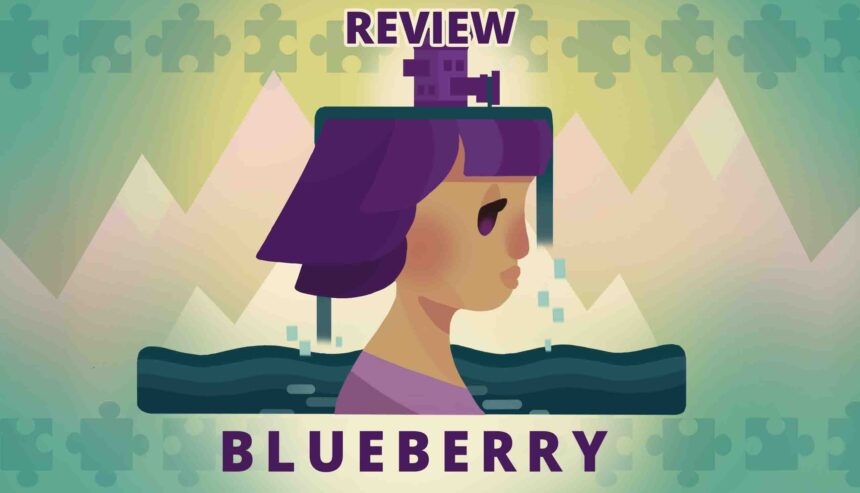
The premise of Blueberry is both metaphorical and literal. I took on the role of the titular character, guiding her through the “Tower of Life,” a physical manifestation of her fragmented mind. The game spans a woman’s entire existence, divided elegantly into four distinct stages: childhood, the teenage years, adulthood, and old age.
Right from the opening moments, I was struck by the game’s central loop: memory reconstruction. As someone who has played a lot of trauma-focused indie games, I often find they can become bogged down in metaphor, leaving the actual gameplay feeling like an afterthought. Blueberry avoids this trap by intertwining its narrative deeply with its mechanics. Every time I helped Blueberry navigate a specific memory, I was rewarded with exactly one puzzle piece. These pieces represent fragments of her shattered sense of self. By collecting them, I wasn’t just advancing to the next level; I was actively helping her unravel the mystery of her past and process the trauma that had shaped her worldview.



Taylor, the game’s creator, actually wrote her thesis on “Beyond Fun – Complex Player Emotions in Games,” and that academic foundation is highly evident here. The game doesn’t strive for the traditional, dopamine-fueled “fun” of a standard arcade platformer. Instead, it seeks to evoke a memorable, complex emotional resonance. And, in my experience, it succeeds brilliantly.
The Mechanics of the Mindscape
Translating emotional states into controller inputs is a difficult design challenge, but Mellow Games has executed it with striking creativity. At its core, Blueberry is an interactive platformer featuring exploration and mystery-solving. The movement itself possesses a slight floatiness—a soft wobble in the air during jumps. In a hardcore precision platformer, this might be a point of critique, but here, it feels entirely intentional. The dreamy, slightly unmoored physics perfectly suit the surreal atmosphere of a mindscape in flux. Navigating the platforms felt less like conquering an obstacle course and more like trying to find steady footing inside a memory.
Managing the Blues
The absolute standout mechanic, and the one that impacted my playthrough the most, is the “Blues” system. Instead of a traditional health bar that drops when you hit a spike, Blueberry has a Blues bar that visually represents her emotional stress and depression.
I found myself incredibly invested in keeping this bar in check. During high-stress narrative events, the bar spikes. For example, in one memorable sequence during her teenage years, I had Blueberry arriving home late from a party. This triggers a massive, intense argument with her mother. As the confrontation escalates, I watched as both Blueberry’s and her mother’s Blues bars shot up, visually quantifying the emotional damage of a dysfunctional family dynamic.
But the game doesn’t just leave you to wallow in that stress; it actively teaches you self-care through its mechanics. To lower the Blues bar, I had to deliberately guide Blueberry toward comforting actions. Making the choice to have her drink her favorite juice, or taking a quiet moment in the level to pet a cat, makes the Blues fade away “no matter what”. It’s a beautifully simple, grounding mechanic that reinforces the idea that even in our darkest moments, small comforts matter.
Choices That Weigh Heavy
Alongside the platforming, the game features a robust dialogue and choice system. The decisions I made didn’t just alter a line of text; they shaped Blueberry’s emotional growth and dictated how she managed her trauma. During spirited “word battles” with her mother, the dialogue options I chose felt weighty and significant. Depending on how I guided her responses, the narrative branched, leading to different emotional outcomes and multiple potential endings. Knowing that my inputs on the controller were directly influencing whether she found peace or continued to carry the burden of guilt made every dialogue prompt feel incredibly important.
Four Seasons of a Fractured Life
The level design in Blueberry is exceptional because it physically adapts to the life stage the protagonist is currently experiencing. The development team has managed to capture the distinct anxieties and joys of each era of life, translating them into engaging environmental puzzles.
Childhood: Innocence and Shadows
The game begins in a vibrant, hyper-imaginative fantasy world representing childhood. I found myself running around, finding hidden doors to transition between memories, and engaging in classic childhood mischief like stealing cookies and causing chaotic messes in the kitchen. However, underneath the bright colors and cute aesthetics, the game subtly layers the beginnings of trauma. I could feel the tension of her home life seeping into the edges of the platforming, setting the stage for the struggles to come.
Teenage Years: Rebellion and Math Tests
As I pushed forward into the teenage years, the tone shifted dramatically. The world became more oppressive, mirroring the turbulent emotions of adolescence. The game brilliantly abstracts everyday teenage fears into gameplay segments. In one section, I literally had to platform my way through the “horrors of math tests,” dodging abstract representations of academic anxiety. This stage is heavily defined by friction, particularly the aforementioned clashes with her mother, which are portrayed with an authentic, uncomfortable realism.
Adulthood: The Weight of Existence
The adult stage is where the game truly solidified its emotional grip on me. Here, Blueberry is dealing with the exhausting realities of the adult world, balancing motherhood, career, and the haunting meaninglessness of existence. The gameplay cleverly adapts to these themes. I found myself frantically playing a workplace minigame, trying to “get as much nutrition as possible” before my lunch break evaporated—a sequence that perfectly captures the modern corporate rat race.
But the most affecting moments of adulthood center on Blueberry’s relationship with her own son. Taking a moment to tuck him into bed, or visiting the nostalgic playground where they used to play, created moments of profound reflection. The game asks a difficult question here: how do you provide safety for your child when you have a deep disconnect from the safety of your own family?.
Old Age: Re-evaluating the Past
Finally, as I guided an elderly Blueberry up the final stretches of the Tower of Life, the gameplay shifted from confronting new traumas to revisiting the old ones. This is where the narrative design truly shines. Playing as an older woman, I was able to look back at the memories I had collected in the earlier stages. With the wisdom of age, the context of those past events changed. Things that seemed terrifying to a child, or infuriating to a teenager, took on a new, melancholic light. It is a brilliant representation of how our perspective shifts as we age, and how healing requires us to constantly re-evaluate our own history.
A Surreal, Shifting Audiovisual Landscape
You cannot talk about Blueberry without praising its audiovisual presentation. The art style strikes a delicate balance between “Dark” and “Cute,” utilizing a surreal, colorful aesthetic that constantly shifts to mirror the protagonist’s internal mental landscape. When I failed to manage the Blues bar, the visual atmosphere would grow heavy and introspective; when Blueberry found a moment of peace, the screen would reflect that warmth.
Equally impressive is the game’s audio design, which utilizes the FMOD engine to create an adaptive soundscape. The original soundtrack, composed by Only Sound, features 18 tracks that perfectly score the emotional highs and lows of the journey. From the creepy, unsettling vibes of “The Monster Under My Bed” to the frantic energy of “Growing Up Blues,” the music always matched the precise emotional beat of my gameplay.
The absolute highlight, however, is the track “Pieces of Me,” an emotional vocal ballad featuring Tori Elliot. Hearing the lyrics—”all that I am is so many things… I need to find those pieces again before they get lost forever”—swell up during key moments of the game was genuinely moving. It is a soundtrack I will absolutely be listening to outside of the game.
Final Thoughts
Priced at an incredibly reasonable 12.49 $/€, Blueberry is an absolute triumph of indie game design. It respects your time, wrapping up its deeply moving narrative in just a few short hours, but the emotional impact of those hours is staggering. Mellow Games and Hidden Trap have delivered a title that proves games can be profound tools for empathy and self-reflection.
Sitting there on my couch, watching the final credits roll, I felt a genuine sense of catharsis. The game does not pretend that trauma can be magically cured by reaching the end of a level; instead, it offers a hopeful message about resilience, forgiveness, and the daily, active choices we make to manage our own “Blues.” The platforming is engaging, the art is gorgeous, and the narrative is handled with a level of maturity that is incredibly rare. Blueberry is an experience I won’t soon forget, and it is a towering achievement in emotional storytelling.