
Torii: An Introspective Odyssey Through the Architecture of Grief
The Landscape of Loss
In an industry often obsessed with endless engagement loops and high-octane action, it is refreshing to dive into a title that asks you to pause and feel. Torii, developed by the solo creator Joaquín Andrés Castro (Moswig) and published by Silesia Games , is a quintessential “empathy game.” It doesn’t ask you to conquer a world, but to understand a feeling.
Playing this on the PlayStation 5 Pro felt like the definitive way to experience Moswig’s vision. While the game’s low-poly aesthetic might not demand the full raw horsepower of the console in the traditional sense, the stability and clarity provided by the system allowed the art direction to truly shine. It felt less like running software and more like interacting with a living painting.
A World of Pastel Surrealism
The visual language of Torii is immediate and arresting. The world is composed of flat-shaded polygons, bathed in a palette of mint greens, soft lavenders, and melancholic blues. It brings to mind the surrealist landscapes of Dalí filtered through a softer, more wholesome lens.
On the PS5 Pro, this art style is elevated to a level of pristine clarity. The sharp edges of the geometry against the void looked stunning on my screen. The “surreal” nature of the landscapes is not just an aesthetic choice; it is a narrative one. The environments are externalizations of the protagonist Ipa’s internal state—fragmented islands representing isolation, and chaotic bridges symbolizing confusion. The console’s ability to maintain a fluid experience ensured that the immersion was never broken; the “dream” never stuttered.
The Narrative Arc: A Poem in Fragments
The narrative premise is stark yet touching: Ipa is searching for her lost sister, Lulu. The game handles the heavy themes of grief and guilt with a poetic touch. We aren’t given lengthy cutscenes explaining the backstory; instead, we piece together the tragedy through “memories”—collectibles that take the form of cards with hand-drawn illustrations and short poems.



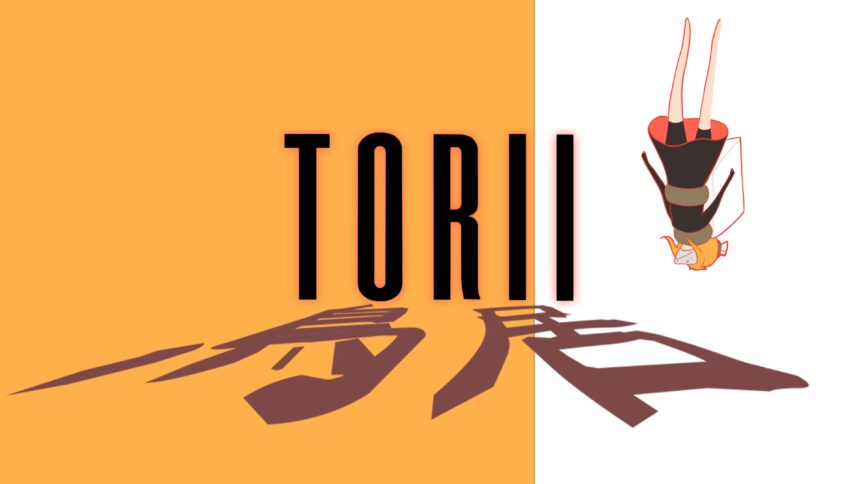
Ipa herself is a masterclass in minimalist design. Small and masked, she allows us to project our own emotions onto her. Her companion, Moswig—a large, floating backpack with a face—represents the “baggage” of grief. Yet, Torii subverts the trope of the burden. Moswig is not a hindrance; he is a helper, essential for navigating the world. It’s a beautiful metaphor: we do not heal by discarding our baggage, but by learning to carry it until it becomes a source of strength.
Gameplay: Mechanics of the Soul
The version of Torii released for consoles includes the significant “The End of the Beginning” (v2.0) update, which has refined the experience considerably. Gone is the stamina mechanic that limited exploration in earlier PC builds. Now, Ipa can run indefinitely, and collecting “wings” allows her to move faster and jump higher. This shift transforms the traversal from a struggle into a joy, mirroring a journey of healing where one becomes lighter and more capable over time.
One of the central mechanics involves the “Astral” plane. Interacting with glowing prisms shifts reality, inverting the color palette and revealing hidden platforms. The transition is instantaneous, snapping the world into its alternate version without a moment of hesitation.
The Dance with the Hums
A standout addition is the stealth gameplay involving “Hums”—small, ghost-like entities that inhabit the Astral plane. In this updated version, catching them has become a tactical game inspired by Pac-Man. Ipa must hide in bushes to avoid their vision cones, waiting for the right moment to grab a specific fruit that makes the Hums vulnerable.
This loop adds a layer of “game” that breaks up the exploration nicely. Hiding in a bush, feeling the tension rise as a Hum patrols nearby, and then dashing out to capture it is satisfying. The DualSense controller added a nice tactile layer to these moments, with subtle vibrations that mimicked the heartbeat of the moment, grounding the surreal visuals in my hands.
The Auditory Landscape
A game like Torii lives and dies by its atmosphere, and the soundtrack by Adriano Martino is the oxygen that keeps it alive. The score is predominantly piano-based, minimalist, and deeply melancholic. It is dynamic, shifting from a gentle ambient wash during exploration to more electronic, urgent textures in the Astral plane. It perfectly complements the solitude of Ipa’s journey.
A Unique Vision
Torii is an experience that prioritizes “vibes” and emotion. It is a game about being lost—both metaphorically and literally. There are no mini-maps or constant objective markers screaming for your attention. You are expected to navigate by landmarks: a giant floating whale or a distant lighthouse.
While some might find this lack of hand-holding initially disorienting, it feels like a deliberate design choice intended to make you inhabit the space and practice patience. The camera can occasionally be a bit unruly in tight spaces, but it rarely detracts from the overall beauty of the experience. It is a small price to pay for such a distinct artistic vision.
Verdict
Torii is a game about the courage to move forward. It is about looking at the scary, confusing, painful mess of the past and deciding to walk through it. Playing it on the PS5 Pro was a seamless, beautiful experience that honored the subject matter.
It is a short, intimate poem of a game. It requires a willingness to slow down and listen, but for those who take the leap, it offers a haunting, healing experience that lingers long after the credits roll.